
Introduction
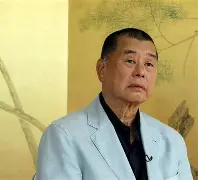
The final stage of Hong Kong media tycoon Jimmy Lai’s landmark national security trial has been adjourned after the 76-year-old was reported to be suffering from health issues. The postponement, announced in court on Friday, marks yet another delay in one of the most high-profile legal battles since the introduction of Beijing’s sweeping National Security Law (NSL) in the territory.
Lai — founder of the now-defunct pro-democracy newspaper Apple Daily — faces charges that could see him spend the rest of his life in prison. Supporters argue that his prosecution is politically motivated and part of a broader campaign to silence dissent in Hong Kong, while authorities maintain that his actions constituted serious threats to national security.
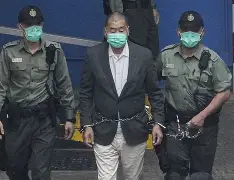
The adjournment underscores the legal, political, and human dimensions of a trial that has already lasted more than a year, and whose outcome will reverberate far beyond Hong Kong’s borders.
Who Is Jimmy Lai?
Jimmy Lai Chee-ying is no stranger to controversy — or to public admiration among Hong Kong’s pro-democracy camp. Born in mainland China in 1948, Lai fled to Hong Kong at age 12, working in garment factories before founding the fashion retail chain Giordano in the 1980s.
In 1995, he launched Apple Daily, a tabloid-style newspaper known for its aggressive investigative journalism and unapologetically critical stance toward Beijing. Over the next two decades, Lai became one of the most prominent business voices supporting Hong Kong’s democratic movement.
His outspoken criticism of the Chinese Communist Party and financial backing of pro-democracy politicians made him a central figure in the city’s political struggles — and a high-value target for Beijing’s ire.
The National Security Law and the Charges
The law has been widely criticised by Western governments, human rights groups, and some legal scholars for its broad definitions and its chilling effect on free speech.
Lai’s charges include:
Collusion with foreign forces — linked to alleged calls for international sanctions against Hong Kong and Chinese officials.
Conspiracy to print and distribute seditious publications — related to Apple Daily articles and commentaries.
If convicted under the NSL, Lai faces a potential life sentence.
Trial Background
The trial began in December 2023 after months of pre-trial hearings and procedural disputes. Notably:
Lai has been denied bail since December 2020, with judges citing the risk of continuing offences.
Hong Kong’s common law tradition.
International observers, including diplomats from the US, UK, and EU, have attended sessions, framing the proceedings as a bellwether for Hong Kong’s judicial independence.
The Adjournment Announcement
On Friday morning, court officials confirmed that Lai was unwell and unable to proceed with the day’s scheduled hearings. Details of his health condition were not disclosed, citing privacy and security concerns.
The presiding judge granted an adjournment until a date to be confirmed, stating:
“Given the defendant’s current health circumstances, the court considers it in the interests of justice to allow a postponement of proceedings.”
Prosecutors did not object, though they urged the court to ensure minimal delays given the lengthy history of the case.
Reactions to the Delay
Supporters and Human Rights Advocates
The delay prompted an outpouring of concern from Lai’s supporters. Amnesty International issued a statement calling for his “immediate release on humanitarian grounds,” citing his age and prolonged pre-trial detention.
His health issues only underscore the inhumanity of this process.”
Authorities’ Position
Hong Kong’s Security Bureau maintained that the trial is proceeding “in accordance with the law” and that all defendants, regardless of profile, are treated equally under the judicial system.
The Political Stakes
Lai’s case has become a flashpoint in the broader debate over Hong Kong’s political freedoms. For Beijing and the Hong Kong government, a conviction would reinforce the NSL’s deterrent power and demonstrate that even the city’s most prominent figures are not above the law.
For the pro-democracy movement, a guilty verdict would represent the closing of a chapter — perhaps permanently — on Hong Kong’s era of robust press freedom.
Internationally, the trial is closely watched by governments that have condemned the NSL as a violation of the “One Country, Two Systems” framework agreed upon when Britain handed Hong Kong back to China in 1997.
Media Freedom in Hong Kong
Since the NSL’s enactment:
Several independent news outlets, including Stand News and Citizen News, have closed under pressure.
Journalists and editors have faced arrests and charges ranging from sedition to national security offences.
Humanitarian Concerns
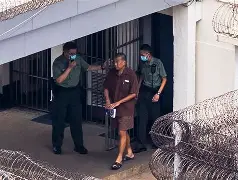
The length of Lai’s detention — over 1,300 days without bail — and his advanced age have raised questions about his treatment under international human rights standards. The UN Working Group on Arbitrary Detention has previously expressed concern about his imprisonment.
Family members have described his physical condition as “deteriorating,” with reports of weight loss and limited access to medical care.
International Diplomacy and Sanctions
The United States, United Kingdom, and European Union have each called for Lai’s release. The UK, of which Lai is a citizen, has been particularly vocal, with Foreign Secretary David Lammy stating:
“The prosecution of Jimmy Lai is politically motivated and contrary to Hong Kong’s legal traditions. The UK will continue to call for his immediate release.”
Beijing has dismissed such statements as interference in China’s internal affairs, warning of consequences for any government that “supports criminals under the guise of human rights.”
The Broader Legal Landscape
Lai’s trial is one of several high-profile NSL cases. Others include:
The “47 democrats” trial, in which activists are accused of subversion for organising unofficial primary elections.
The prosecution of former lawmaker Claudia Mo for allegedly colluding with foreign powers.
Legal analysts say the NSL has reshaped Hong Kong’s legal system, eroding protections for defendants and expanding prosecutorial powers.
Possible Outcomes
While the adjournment delays the inevitable conclusion, observers see three main possibilities:
Conviction on all counts — Likely resulting in a life sentence, reinforcing the NSL’s reach.
Partial acquittal — Unlikely, but could be framed by authorities as proof of judicial independence.
Dismissal or humanitarian release — Politically improbable without significant external pressure.
Public Opinion in Hong Kong
Local sentiment is divided:
Some residents view Lai as a courageous defender of Hong Kong’s freedoms.
Others see him as a destabilising figure whose alliances with foreign politicians crossed legal and patriotic boundaries.
A recent University of Hong Kong poll found that while support for the NSL has declined since 2020, a slim majority still view it as necessary for stability.
The Road Ahead
The court will reconvene once medical assessments confirm Lai’s ability to participate in proceedings. Whether the delay lasts weeks or months, it adds uncertainty to a case already symbolic of Hong Kong’s transformation under Chinese sovereignty.
For Lai personally, every day matters. At 76, facing potentially life-ending prison time, the trial’s pace — or lack thereof — carries profound implications for his remaining years.
Conclusion
Jimmy Lai’s adjourned trial is more than a legal matter. It is a prism through which the world can see the competing narratives about Hong Kong’s future: Beijing’s insistence on sovereignty and order, versus the international community’s calls for freedom and human rights.
As the King once said in a different context, “Justice must be seen to be done.” In Lai’s case, the question remains whether justice will be viewed as lawfully enforced or tragically denied.
The next court date, when it comes, will not only resume the legal proceedings — it will also reignite the global debate about where Hong Kong is headed.

