
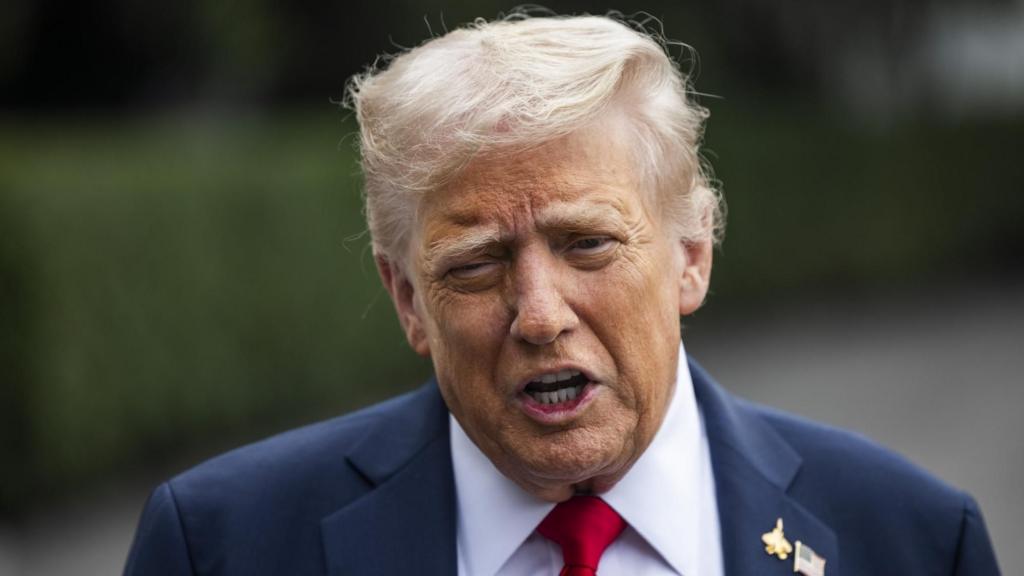
Trump Threatens Mass Layoffs as Government Shutdown Deadline Looms
As the U.S. faces a looming government shutdown, former President Donald Trump has escalated the stakes by threatening to enact permanent mass layoffs of federal workers—rather than the traditional furloughs—if Congress fails to pass a funding deal before the deadline. The move marks a sharp departure from precedent, intensifying a fraught showdown with Democratic lawmakers who have vowed not to yield under what they call heavy-handed tactics.
Stakes & Context
On September 30, 2025, the U.S. enters the new fiscal year. Without a spending bill or short-term continuing resolution (a stopgap funding measure) in place, many government agencies will have to cease operations or sharply curtail services. In past shutdowns, federal employees deemed “non‑essential” were furloughed—sent home without pay temporarily—and later reimbursed once funding was restored. But this time, the White House is signaling that permanent cuts may follow.
A memo from the Office of Management and Budget (OMB) instructed agencies to prepare Reduction-in-Force (RIF) plans for programs whose funding will expire and are “not consistent with the President’s priorities.”
CNBC
+2
Capital Brief
+2
In effect, this means permanent elimination of roles ahead of a funding gap, rather than the status quo of temporary leave.
CNBC
+2
CNBC
+2
Trump himself publicly warned that, if a shutdown occurs, “we are going to cut a lot of the people that … we’re able to cut on a permanent basis.”
CNBC
+1
He added that he would “rather not do that,” underlining that the mass firings are a last resort—but making clear the administration stands ready to follow through.
Observers view this as a hardball tactic: by threatening real job losses, the White House is trying to pressure Congress to fold on its demands before the shutdown even begins.
Why This Is Different
Several aspects of this threat mark a departure from how past shutdowns played out:
Permanent vs. temporary: Previous shutdowns relied mostly on furloughs, which are reversed when funding returns. This time, many could see their jobs eliminated outright if their agency or program is deemed inconsistent with administration priorities.
Capital Brief
+2
www.ndtv.com
+2
Political leverage: By placing the threat front and center, the White House forces Democrats to weigh whether to hold firm on policy demands (e.g. health care, Medicaid) or risk being blamed for mass unemployment.
sjodaily.com
+3
CNBC
+3
Capital Brief
+3
Legal and administrative push: The administration is already facing lawsuits and court challenges over its broad authority to trim the federal workforce.
Politico
+3
Reuters
+3
AP News
+3
Scale of cuts already underway: Since early 2025, the Trump administration has aggressively reduced the size of the federal workforce through buyouts, resignations, and reorganizations. Nearly 300,000 federal jobs have been targeted or lost across various agencies.
Wikipedia
+2
Capital Brief
+2
The cumulative effect: many workers may find themselves out of a job permanently, not just sidelined until the budget impasse is resolved.
Reactions & Pushback
From Democrats & Labor Unions
Top Democrats have pushed back forcefully. Senate Minority Leader Chuck Schumer called the OMB memo and Trump’s remarks “an attempt at intimidation,” arguing that federal employees should not become political pawns.
Capital Brief
+3
CNBC
+3
CNBC
+3
House Minority Leader Hakeem Jeffries accused Trump and “MAGA extremists” of “plotting mass firings,” and declared that “we will not be intimidated.”
CNBC
+2
sjodaily.com
+2
Unions that represent federal workers have vowed legal action and collective resistance. Many argue the administration is overstepping its authority, because Congress holds the power to create and fund federal positions.
Politico
+3
Reuters
+3
AP News
+3
In multiple lawsuits, courts have already temporarily blocked mass firings and dismantling of agencies, though those injunctions are being challenged.
Politico
+3
Reuters
+3
AP News
+3
From Legal & Institutional Watchdogs
Critics warn that the threat violates long‑standing norms and possibly federal statutes governing workforce reductions and due process. The executive cannot simply eliminate positions without complying with law, including notice, appeals, and congressional oversight.
Politico
+3
Reuters
+3
AP News
+3
A federal judge recently ordered the Trump administration to halt planned layoffs of 532 employees at the U.S. Agency for Global Media (USAGM), citing “concerning disrespect” for judicial mandates.
Reuters
The decision is a signal that courts may push back on otherwise sweeping executive actions.
From the Public & Media
News organizations, political commentators, and watchdogs see the mass layoff threat as a sharp escalation in the conventional shutdown standoff. Some characterize it as “mafia-style blackmail” meant to browbeat Democrats into submission.
South China Morning Post
+1
Analysts warn such a precedent could hollow out federal capacity—especially in essential or legally mandated programs.
Many federal workers are anxious and uncertain about the future. Over the past months, some have already accepted buyouts or resigned under pressure. In a few days, many more may find themselves in limbo, waiting to see whether their jobs survive this confrontation.
Wikipedia
+2
Capital Brief
+2
Possible Outcomes & Implications
Shutdown Avoided but Threat Stands
If Congress ultimately passes a funding bill or continuing resolution, the immediate threat of layoffs would recede—for now. But the fact that the administration demanded RIF planning may leave long-term unease in the ranks. Agencies may quietly carry out cuts or reorganize programs later, citing new priorities.
Shutdown Occurs, with Furloughs and Cuts
In classic shutdown style, non-essential services could grind to a halt, and many workers would be furloughed without pay. But under the current plan, some agencies may also issue permanent layoff notices simultaneously, which would worsen the impact and introduce uncertainty even for workers not immediately cut.
Shutdown & Mass Layoffs
This is the scenario Trump is threatening. In it, programs deemed misaligned with his priorities would lose staff permanently, even if funding is eventually restored. For many, “back pay” would not apply—once the position is gone, it’s gone.
The consequences could be severe:
Loss of institutional memory and reduced capacity in federal agencies
Delays or failure in delivering public services (health, social programs, environmental oversight)
Political fallout as affected workers, communities, and local economies react
Legal battles that could drag on for years
Why Trump Is Taking This Gamble
Observers point to several strategic motives:
Political pressure on Democrats: The threat forces Democratic lawmakers to weigh the political cost of defying the administration while thousands of workers are put at risk.
Reshaping the government: Trump has long campaigned on shrinking the federal bureaucracy. These cuts align with his vision of “smaller, more efficient government.”
CNBC
+3
www.ndtv.com
+3
Wikipedia
+3
Negotiating leverage: By preemptively raising the cost of a shutdown, the administration hopes to anchor negotiations in its favor.
Legacy and boldness: A successful purge could leave a lasting imprint on how the federal government operates—and serve as a public symbol of power.
But it’s a risky strategy. If Democrats hold firm and public opinion turns against the layoffs, the damage may extend to Trump’s allies and his broader agenda.
What to Watch In the Coming Days
Congressional action: Will a stopgap funding bill pass? Will Democrats yield on health care or Medicaid demands to avert cuts?
Court rulings: Will judges enjoin or block any mass layoff attempts?
Agency plans: Which departments submit RIF notices? How many employees do they target?
Public backlash: As news spreads to affected communities and federal workers, pressure may mount on lawmakers to respond.
Media framing: How the press portrays this standoff could influence public sentiment—whether the administration is viewed as ruthless reformer or reckless threat.
In sum, Trump’s threat to convert a government shutdown into a weapon for wholesale firings marks a turning point in U.S. political brinkmanship. The next few days will determine whether that threat remains rhetorical or becomes reality.

