
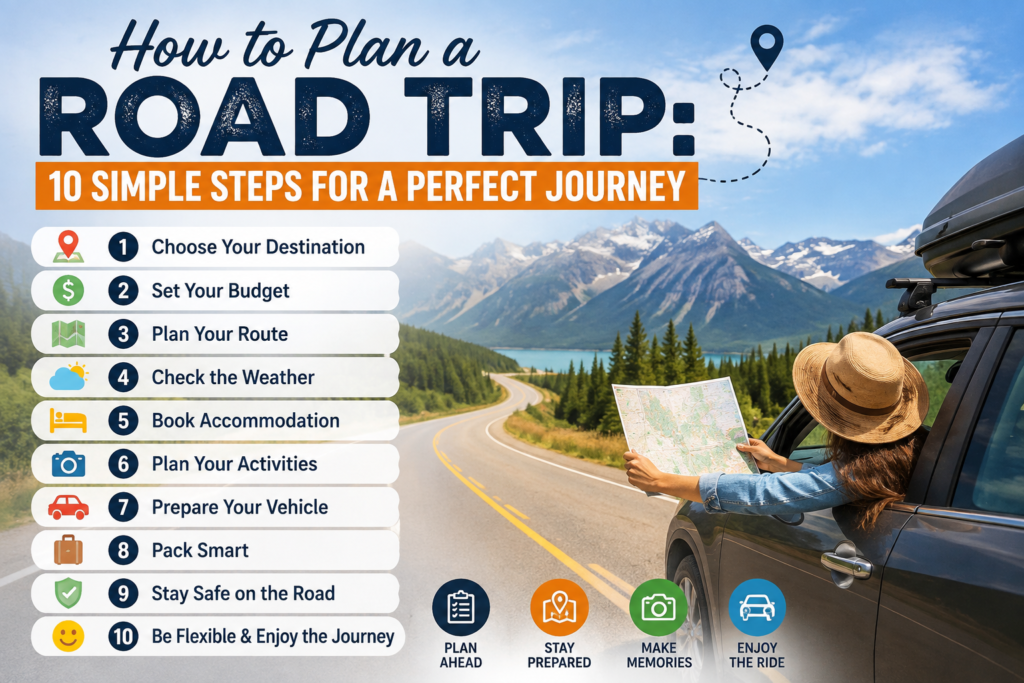
How to Plan a Road Trip: 10 Simple Steps for a Perfect Journey
10most.net
How to Plan a Road Trip: 10 Simple Steps for an Unforgettable Adventure
There is something to be said about the freedom of a road trip. Unforeseen pit stops along the way give you the ability to experience hidden gems and make lifelong memories. Unlike conventional trips that force one to adhere to a specific time frame or schedule, road trips offer one the ability to slow down and enjoy what makes the trip valuable. All of this, of course, only comes from prior planning.
For many, the focus is solely on sightseeing when it is not just about figuring out the route, but also emergency planning, budgeting, vehicle prep, and many things of such nature. It is about learning how to plan a road trip. This helps one avoid the added worry that is a byproduct of not being prepared.
These 10 simple steps will help you plan a stress free road trip whether it be a weekend get away, or a cross country adventure. This guide is to help you plan the safety aspects and enjoyment aspects of your trip in preparation of your next road trip.
Define Your Road Trip Expectations
How best to describe the way one thinks about this question and how it relates to the road trip, but setting expectations is important to any road trip. Some people enjoy a road trip more for the relaxation, some enjoy it for adventurous activities, others more for the food and then some for the stops and attractions along the way. Knowing what you set as your expectations helps you decide your destinations and how you will plan to travel.
Consider your passengers and what they’d like to get out of a road trip when you pick a route. Some may want lots of breaks for touristy stops, others may enjoy longer stretches of driving. Spontaneous stops are great for solo travel. Families usually enjoy activities, and couples may want to stay in locations with great views.
Your travel style will influence a lot of your decisions surrounding your road trip and especially which places you’ll visit.
The length of your trip
Your daily drive
Where you’ll stay each night
What you’ll do on your drive
Your budget
One of the biggest mistakes travelers make is trying to see too many places in one trip. It is much better in the long run to take your time and travel to fewer destinations, as you will make much better travel memories.
You have to think about the pace you like to travel with and if you like to take lots of stops in a short time or a longer drive with a few breakdowns.
Choose Your Destination and Build a Flexible Route
Picking your destination and knowing your route is probably the best part of planning a road trip, but it is also the most difficult. The first thing to do is pick your most important destination and start to build routes around it based on some stops along the way, scenic routes, national parks, rest stops, places to eat, and other areas of interest.
The best routes strike a balance between time you’ll be on the road and time for appreciating your surrounding environment and scenic stops. Take advantage of the internet with travel route planners to get the best route estimate based on driving time and conditions, fuel, stops, and time of day. Your best route may be the most scenic, even if it is longer.
Things to keep in mind:
Where do you want to be, and when?
Where can you afford to stay if time is short?
What will you do in between locations?
What stops will you want to consider, just in case?
Flexibility is needed. Weather, traffic, events, and things you just have to do can throw things for a loop. But instead of making an itinerary with no wiggle room, block out what you need to do and then draw some wiggle room.
Having a flexible road trip itinerary means you can do things on a whim without stressing over a schedule.
Create A Realistic Road Trip Budget
Know how much money you’ll need. A lot of road trippers think that the biggest expenses will be gas and a hotel but there are added costs for food, the parking garage, tickets to see things and even costs to pay for needed maintenance.
In a budget, each of these should be considered:
Category Examples
Transport Fuel, Parking
Stays Hotels, AirBnb
Eats Food
Fun Tickets, Shows
Emerg Things Beyond your Control
Fuel is typically the biggest thing you pay for. Figure out how far you will drive and what you will have to pay for each step of the way. Dedicating a little wiggle room to your budget will cover the unknown and unexpected.
A budget doesn’t mean you need to spoil yourself, it means you make smart decisions on where you draw the line on your spending.
Get Your Vehicle Checked Out
Your vehicle is your main component in your road trip. A road trip with stress and trouble is a long boring trip. Make sure you get a check done on your vehicle especially if you’ll be road tripping far. Make sure your vehicle is in safe driving condition.
Check the following:
Tire pressure
Level of engine oil
Brake performance
Battery performance
Coolant level
Windshield wipers
Spare tire and emergency tools
Have on hand your insurance, registration, and roadside assistance information
Car cleaning and organization prior to a trip is best practice. Reduce clutter and maximize storage. Arrange frequently used items in easily accessible places.
Preventative maintenance pays off, especially when it comes to vehicle maintenance and planning a road trip.
Advance Accommodations Planning
Your traveling style and destination will determine the style of accommodations. For some, comfort will drive the choice of hotel. For others, it will be camping or a vacation rental.
During popular travel times, booking far in advance will be necessary. Research potential accommodations for your travel route, and consider the following:
Convenience of location
Available parking
Safety
Reviews
Flexible cancellation policies
For longer road trips, avoid booking accommodations far from the next day’s driving. Easing fatigue will improve enjoyment of the trip and driving safety.
Smart travelers will book the most important overnight stops. The rest will be booked when traveling flexibility allows.
Proper Packing and Essentials of a Road Trip
Packing properly is important for comfort level and organization during your trip. Most travel organizers will either overpack or forget essentials. Happy travels.
Packing for a road trip means packing the following:
Phone chargers, power banks
Navigation tools
First aid kit
Water bottles
Sunglasses
Travel Documents
Emergency supplies
Comfortable clothes
Entertainment
Consider the trip you are taking, like whether you are visiting the beach or going mountain climbing, as these will affect what you will pack.
Do not fill your vehicle to capacity, this will create tension during the trip and quicly become frustrating with multiple travelers.
Keep convenience in mind when packing. The goal should be to keep items you will use most frequently at the top and easily accessible.
Plan Food and Rest Stops; Limit Daily Driving
Food, rest, and breaks are essential for a comfortable road trip. Driving long hours can become stressful and tiresome on your body. It is important passengers take scheduled stops and breaks for stretching and eating.
Long daily drives can become tiring. Thus it is important to keep driving limits realistic. Limits should be determined by experience and conditions of the road and your personal level of comfort.
Plan:
To arrive at your destination rested and not tired from driving
To arrive at interesting places to eat
To take breaks at rest areas along major highways.
Resting overnight at stops along your route.
Try eating at the regional restaurants along your road trip rather than eating at fast food chains that will be familiar. It will help create a memorable road trip.
A well-paced trip allows you to enjoy your trip rather than just trying to get to your destination as fast as possible.
Emergency and Safety Planning
Safety is a key aspect that needs to be addressed when you are planning your road trip, since there will be a lot of unpredictable things that can easily disrupt your plans along the way.
Keep your vehicle stocked with:
Flashlight
Basic tools
First aid
Blankets
Water
Portable Charger
Warning devices
Let someone know your travel plans, especially on remote trips. Charge your phone and load maps in all areas with no signal.
The worst driving mistakes can be avoided with a little forethought. Some of the worst mistakes include, but are not limited to:
Driving while tired
Driving on unsafe roads due to disregard for weather advisory
Ignoring a vehicle check
Packing too much into your itinerary
Failing to carry emergency travel supplies
Taking a safe road trip doesn’t have to be a boring adventure; it means making good judgments to ensure a carefree enjoyment of your trip.
How Technology Can Make Your Journey Easier
Thanks to technology and convenient software bundles, road trip planning has become easier. You can create routes, find spots to go, and organize your budget as well as your itinerary all in one place.
There are many tools available, but keep in mind that too much reliance on technology can create problems. Have a backup itinerary and notes, just in case.
Technology works optimally with classic trip planning. Digital maps are great, but you need to plan the trip and have backup plans.
Adventure Safe, Last Check
When all the planning is done, the last check of the route, confirming all its reservations, checking the car, and a final review of the plans for each person should be done.
A final review is incomplete without:
Travel dates
Destination information
Accommodation
Transportation
Contacts in case of emergency
Weather
The best trips are the most unpredictable. Often, the magic and joy of a trip are the unexpected moments of serendipity and pleasant surprises.
A little planning goes a long way, but unpredictability yields the best memories.
Other tips for budget-conscious road trippers
Traversing the country on a tight budget is easier than you might imagine. Here are some other ideas to save money on the road:
Shoulder season travel
Booking trips and accommodations in advance
Self-serve meals
Using grad programs
Sticking to the plan
Traveling with a group
A great trip doesn’t have to cost a lot.
Getting hooked on time-consuming trip planning
Filling your time with too many activities
Forgetting to check in and fill up your vehicle
Deriving zero pre-trip benefits from preparation
Driving while tired
Sightseeing without preparing in advance
In order to have a great trip, you must plan to be spontaneous.
The best trips aren’t about getting somewhere — it’s about what you do and what you see on the way there.
Memorable moments on the way to a destination are:
Having a playlist made specifically for the road
Taking pictures of awesome sights
Exploring the local eats
Stopping at the local cafes
Chronicling your journeys
Meeting the locals and talking to them
Getting off the beaten path pays off in great memories.
Frequently Asked Questions
When should I book a road trip?
Planning a road trip in advance is always better as some trips require reservations or travel during peak time. Ultimately, shorter road trips don’t always require a ton of advance planning. However, you should at least have an idea of your route and the condition of your vehicle.
What is the most important part of planning a road trip?
The most important part of planning a road trip is figuring out an itinerary that fits your schedule, budget, and travel preferences! A flexible travel schedule and a dependable vehicle are on the top of the list when planning your road trip.
How many hours should you drive while on a road trip?
The consensus among most travelers is that around 6-8 hours of driving is about right, but comfort level and types of planned activities along the way will make a difference for everyone.
Do I have to have a plan for every stop I make?
No! It is a good idea to identify some stops, but budgeting time to drive off the beaten path and explore is always a good idea.
If my car breaks down, what should I do?
Get away from your car/truck and to a safe spot, call for roadside assistance and give your location to those to assist you.
Summary
Going on a road trip is a lot more than just booking travel to a destination and considering a few safety tips. Booking a dependable vehicle, budgeting well, planning a safety itinerary and route, and preparing a vehicle and smart packing are what thoughtfully planning a road trip is all about. This planning can easily take your basic traveling routine to the next level!





Hi, this is a comment.
To get started with moderating, editing, and deleting comments, please visit the Comments screen in the dashboard.
Commenter avatars come from Gravatar.
이 사이트를 알게 되어서 매우 기뻤습니다.
이 멋진 읽기를 위해 시간 내줘서 감사합니다!!
저는 확실히 모든 부분을 좋아했습니다 그리고 당신을 북마크
해놓고 새로운 정보를 확인할 것입니다.
Hi Dear, are you actually visiting this site on a regular basis, if so after that you will absolutely
get fastidious experience.
This is one of the best blogs I’ve come across in a while!
Your writing style is so engaging, and the content is excellent.
Do you have any advice for new bloggers on how to create content as
compelling as yours? Thanks!
이 블로그는 정말 훌륭합니다! Rémunération에 대한
글들이 너무 흥미롭고 잘 작성되었어요.
RSS 피드를 추가해서 최신 업데이트를 받아볼게요.
계속해서 이런 훌륭한 콘텐츠 부탁드립니다!
고맙습니다!
I found the discussion particularly relevant to active traders.
learn more here